





Looking for information about kinesiology tape, also known as kinesiotape or elastic therapeutic tape?
The abbreviation KT tape is also commonly used online as a general search term for this type of elastic tape.
CureTape® is our own kinesiotape brand and is not affiliated with the separate KT Tape brand.
THYSOL is an authority in the field of kinesiology taping and is happy to share its knowledge with you.
Learn more by attending one of our MTC® kinesiology taping courses or
contacting us.
Quicklinks:
What is kinesiology tape?
Kinesiology tape is an elastic cotton tape with a hypoallergenic acrylic adhesive layer.
It is designed to move with the body and has elasticity and thickness comparable to human skin.
High-quality kinesiology tape is breathable, water resistant and can remain in place for several days.
Kinesiotape is used by physiotherapists, sports massage therapists, trainers and people who want
additional support during movement and physical activity. Although some people informally call this type
of product KT tape, CureTape® is a separate brand of professional kinesiology tape.
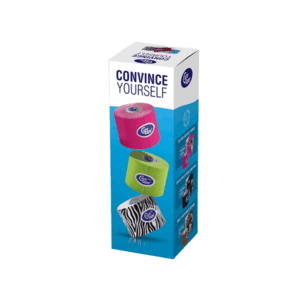
How to compare kinesiology tape?
When comparing kinesiology tape or researching a KT tape alternative, look at more than price alone.
Important factors include the quality of the cotton, elasticity, breathability, water resistance,
skin friendliness and consistency of the adhesive.
THYSOL Australia supplies CureTape®,
a professional kinesiology tape manufactured in our own factory in South Korea.
Managing the production process ourselves allows us to provide consistent product quality and
professional and wholesale pricing.
-
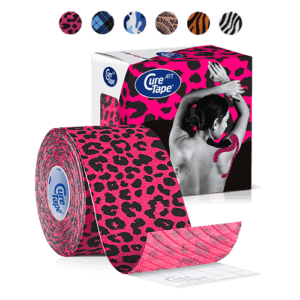
CureTape® Art Printed Kinesiology Tape
 $19.50
Select options
This product has multiple variants. The options may be chosen on the product page
$19.50
Select options
This product has multiple variants. The options may be chosen on the product page
-
CureTape® Classic Kinesiology Tape
Bestseller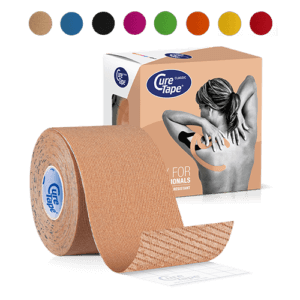 $17.95
Select options
This product has multiple variants. The options may be chosen on the product page
$17.95
Select options
This product has multiple variants. The options may be chosen on the product page
-
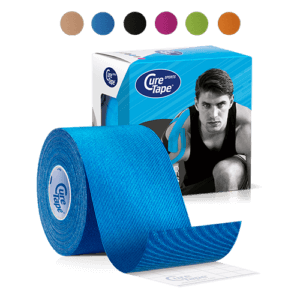
CureTape® Sports Extra Sticky Kinesiology Tape
 $19.50
Select options
This product has multiple variants. The options may be chosen on the product page
$19.50
Select options
This product has multiple variants. The options may be chosen on the product page

History of kinesiology tape
Elastic therapeutic tape was developed in Japan during the 1970s. The method originated from principles
associated with kinesiology and was later practised and further developed in Korea.
The tape was designed to provide support without the rigid movement restriction associated with traditional
athletic tape. This made it possible to combine support with a greater range of motion.
How does kinesiology tape work?
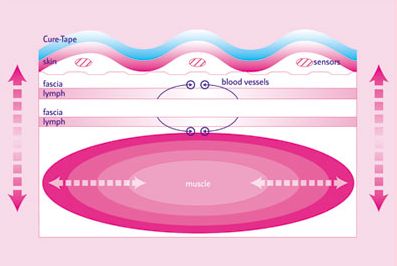
Before kinesiology tape is applied, the relevant muscles and joints are often positioned according to the
selected taping technique. When the body returns to a relaxed position, visible ripples known as
convolutions may form in the tape.
Kinesiology tape is elastic and follows the movement of the body. This principle applies to kinesiotape
products generally, including products that consumers may search for using the term KT tape.
The precise application method depends on the treatment area and the intended purpose. For professional
or therapeutic applications, consult a trained practitioner.
Kinesiology tape at wholesale pricing
With a THYSOL Australia wholesale account, ordering fascia tools and kinesiology tape at professional prices
is easier and more efficient for your business. Your specific wholesale pricing is displayed directly in the
online shop after logging in.
Your business details are automatically entered during checkout, and a dedicated account manager is
available when you require help with your order.
Why choose THYSOL Australia?
- Save time and money on quantity orders.
- Order kinesiology tape, silicone cups and fascia tools in one place.
- Receive support from a dedicated account manager.
- Buy directly from the supplier.
- Choose from premium brands used around the world.
- Benefit from better pricing on larger quantities.
- No long-term contract or commitment.
How to apply and use kinesiology tape
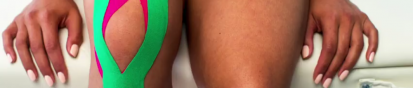
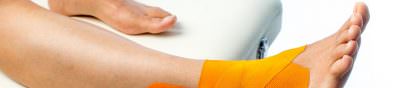
Kinesiology tape can be used in many different supportive applications. A suitable application depends on
the body area, the intended goal and the selected taping technique.
Browse the practical application guides below for commonly taped areas.


★★★★★
“I am using CureTape, a kinesiology tape that convinced me from the beginning because my clients
tolerate it well. CureTape is easy to remove and is also easy to apply for people who feel confident
using it at home. The general response from my customers is very positive.”
Kinesiology tape colours
CureTape® is available in a wide range of colours, including beige, blue, yellow, green, orange, red,
pink, white and black.
Printed designs are also available in the
CureTape® Art range.
Kinesiology tape sizes
A standard kinesiology tape roll is generally 5 metres long and 5 cm wide. Consumers searching for KT tape
will often encounter the same standard roll size. THYSOL also offers CureTape® bulk rolls and different widths
for smaller, larger or more precise kinesiotape applications.
Explore our complete kinesiology tape range
to compare the available sizes.
Kinesiotape: tips for taping
- Apply the tape to clean, dry and oil-free skin.
- Remove excessive hair when necessary to improve adhesion and make removal easier.
- Round the corners of each strip to reduce early lifting.
- Apply the beginning and end of the tape without stretch.
- Avoid folds in the tape or in the skin beneath the application.
- Rub the tape gently after application to activate the adhesive with warmth.
- Do not apply additional external heat directly to the taped area.
- Remove the tape if persistent itching or irritation occurs.
- Remove the tape slowly while supporting the skin.
- Avoid using excessive stretch during application.
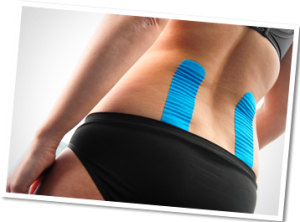
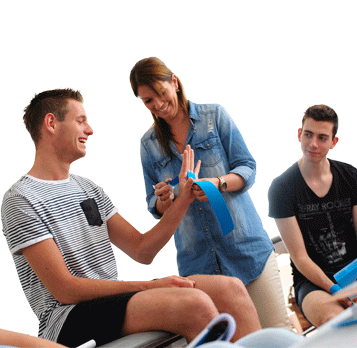
Kinesiology taping courses
THYSOL has developed and delivered MTC® kinesiology taping courses around the world.
These courses are offered through the MTC® Medical Taping Concept brand and are designed for
professionals who want to learn practical taping methods.
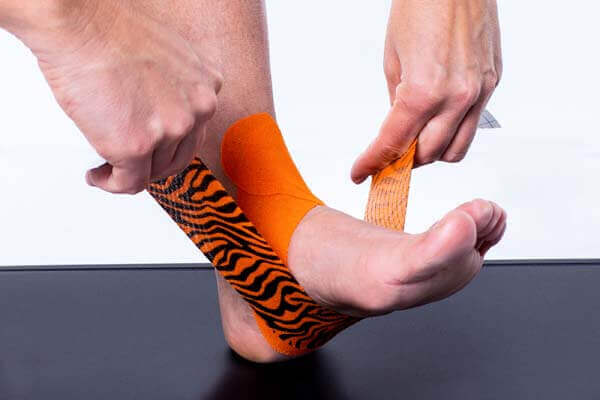
THYSOL authority in kinesiology taping
THYSOL helped introduce kinesiology taping to the professional European market. CureTape® is produced in
our own factory in South Korea and is developed for consistent professional use.
Through CureTape®, professional education and practical application guides, THYSOL has built extensive
experience in kinesiology taping and related treatment products.
Where to buy kinesiology tape in Australia?
THYSOL Australia supplies and distributes CureTape® throughout Australia. If you are searching for
kinesiotape or a KT tape alternative in Australia, CureTape® offers a professional option in a wide range
of colours, sizes and variants. CureTape® has been produced in our own South Korean factory since 1998,
allowing us to manage the production process and maintain consistent product quality.
Characteristics of CureTape® kinesiology tape
- High-quality elastic cotton.
- Breathable and water resistant.
- Hypoallergenic acrylic adhesive layer.
- Latex-free.
- Available in different colours, sizes and variants.
- Manufactured in our own factory in South Korea.
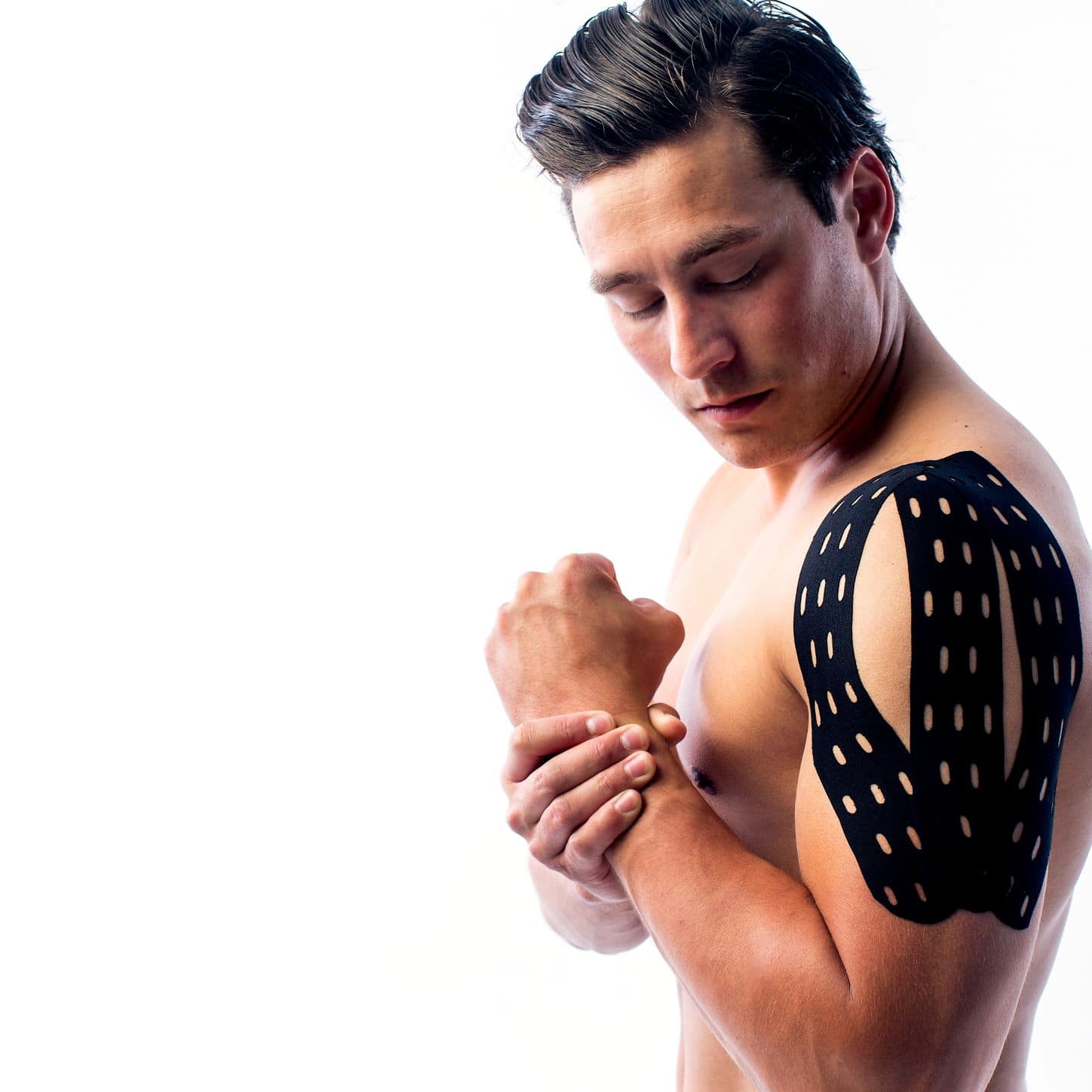
Request CureTape® kinesiology tape samples online
Physiotherapists, health clinics and other healthcare professionals often ask whether they can test
CureTape®. THYSOL Australia understands that switching kinesiology tape brands requires careful
consideration.
Our CureTape® sample package allows professionals to assess the material, elasticity and adhesion before
selecting a tape for regular use.

FAQ Kinesiology tape
Kinesiology Tape has an elasticity that corresponds to the elasticity of the skin. When the tape is applied correctly, the muscles and joints are first stretched as far as possible, after which the tape is applied. The Kinesiology Tape lifts the skin slightly as soon as the skin returns to its natural relaxed position. Waves, which are also called convolutions, form at the place where the tape is applied. The convolutions create a space between the epidermis and the subcutis, where all kinds of nerve receptors, blood and lymph vessels are located. The pressure around this area is thus reduced thanks to the application of the Kinesiology Tape. At the same time, the circulation of blood and lymph is stimulated.
Kinesiology taping is applied in a very wide and varied way. Kinesiology tape is applied as an extra intervention, as part of treatment, to achieve a faster result. Because the tape can remain in place for several days, you create a 24-hour treatment.
By combining various taping techniques, problems can be treated on several levels simultaneously. The most common problems where Kinesiology Tape is applied are:
- Reduction of pain
- Reduction of swelling
- Supportive movement pattern
- Reduction of allergic symptoms (e.g. hay fever)
- Improvement of blood circulation
The material of the kinesiology tape is made of high-quality cotton and has a similar elasticity to human skin (130-140% stretch). The hypoallergenic acrylic adhesive layer on the back of the tape reduces the risk of skin irritations. The adhesion of this adhesive layer is activated by your body heat. The tape has an air and water-permeable fabric structure. This tissue structure is water-resistant and can be worn for several days without the tape losing its effectiveness.
In short, kinesiology tape is:
- The most commonly used tape among professionals
- Constant, high quality
- Skin-friendly and suitable for sensitive skin
- Latex-free, elastic, water resistant, and breathable
- Production in our ISO-certified factory in South Korea
- Complies with the latest European medical MDR legislation
- Excellent quality and a ISO certificate
Elastic Kinesiology Tape is often used by physiotherapists, sports masseurs and physiotherapists. But even injured sportsmen and women sometimes use the tape themselves. The kinesiology tape provides optimal stimulation and stabilization of joints and muscles.
It is always important to start by washing your hands before applying the tape. Kinesiology Tape adheres best to grease-free, and dry skin. When there is a lot of hair at the place of application, the tape has less or no effect. Therefore, it is advisable to remove the hair.
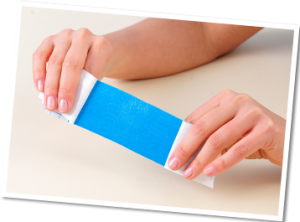
When cutting the tape to size, it is important to take into account the amount of stretching you want to apply. It is also advisable to cut the corners off. In this way, the chance of the corners coming loose is smaller. Tear up the paper and make sure that the anchors are still covered with the paper after applying the tape. The anchors are applied without stretching. Make sure that you avoid folds when applying the tape. To prevent blisters or irritation, it is important not to use too much stretch when applying the tape.
To learn more about applying the tape yourself, we recommend using our book The Ultimate Kinesiology Taping Guide!
- Acute injury, which cannot be properly/completely diagnosed
- Fever
- Pregnancy (first 3 months) in the pelvic region
- An allergic reaction to the skin
- Thrombosis, a thrombus could come loose
- An open wound, burns, skin disorders (except dry skin), fresh/not closed scar
- Oedema (fluid accumulation) caused by heart or kidney problems, circulation should not be increased
- In the presence of carcinoma or metastasis, circulation must not be increased
CureTape Classic
- Beige
- Black
- Blue
- Green
- Pink
- Orange
- Yellow
- Red
CureTape Sports
- Pink
- Black
- Beige
- Lime
- Blue
- Orange
CureTape Giant
- Beige
- Black
- Blue
- Green
- Pink
- Orange
- Yellow
- Red
CureTape ART
- Tattoo
- Leopard
- Tiger
- Zebra
- Army Blue
- Tartan
CureTape Punch
- Beige
- Black
- Blue
- Pink