






 Great for Lymphoedema
Description
Buy kinesiology tape in bulk and save
Buy in bulk to save $ and get the displaybox with 6 rolls.
Why choose CureTape® Punch?
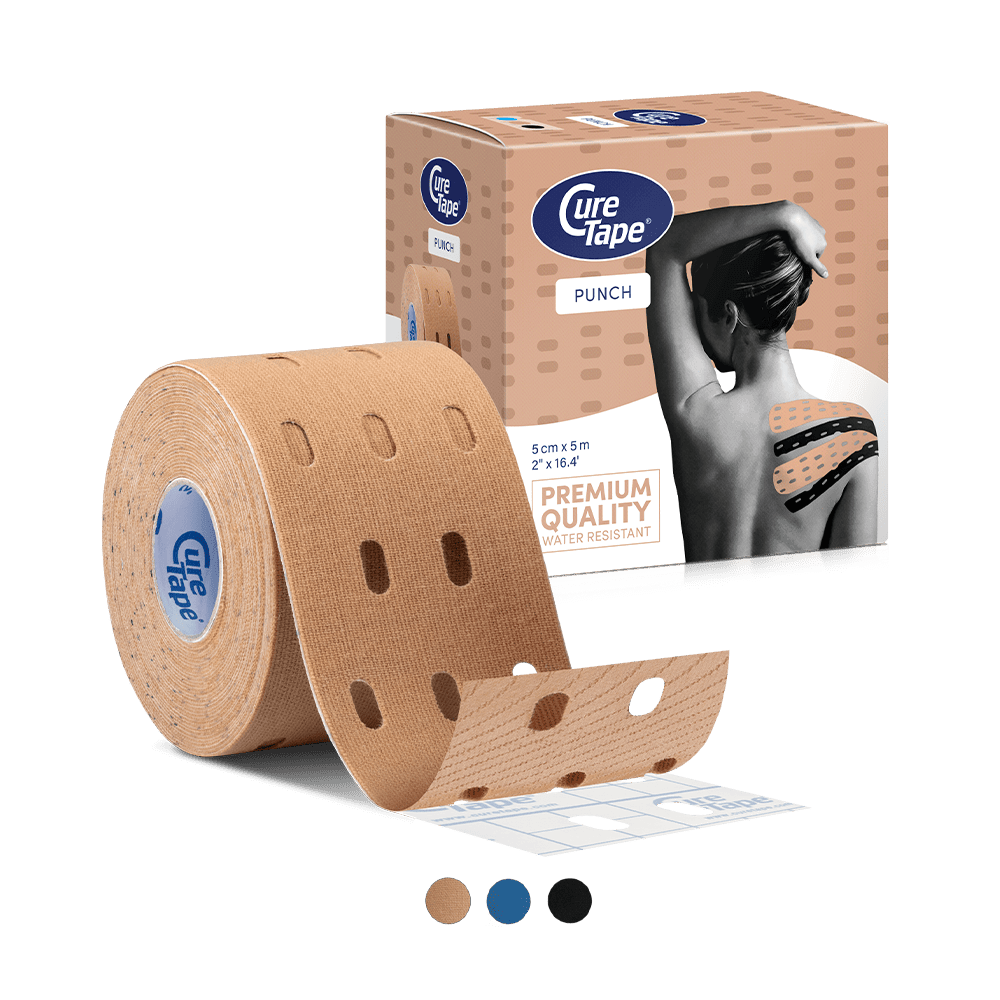
CureTape® Punch combines all the benefits of premium kinesiology tape with a patented perforated design that creates a greater stretching capacity and enhanced three-dimensional stimulation. It is commonly chosen by therapists for:
- Lymphatic taping and lymphoedema treatment.
- Supporting lymphatic drainage.
- Scar tissue and fibrosis treatment.
- Supporting fascia mobilisation techniques.
- Acute injuries accompanied by swelling or bruising.
- Applications where increased sensory input is beneficial.
Because of its unique construction, CureTape® Punch offers a different therapeutic approach compared to standard kinesiology tape while maintaining the same elasticity and freedom of movement.
Features
- Patented perforated kinesiology tape.
- Enhanced three-dimensional skin and fascia stimulation.
- Hypoallergenic acrylic adhesive.
- Elastic cotton with excellent breathability.
- Water resistant and latex free.
- Manufactured in an ISO-certified factory in South Korea.
- Complies with current European MDR and UKCA medical device regulations.
★★★★★
“I really love this product, I use it with almost every lymphoedema patient. It’s great for using on the back of the hand where swelling can be difficult to manage, but also at the top end of a compression sleeve where a ‘muffin top’ can appear. It’s also great for breast lymphoedema! Will always have a role of this tape in my clinic”
— Annabel, Wilmslow
How does CureTape® Punch work?
Like traditional kinesiology tape, CureTape® Punch gently lifts the skin after application. Its patented perforated design creates additional pressure variations around each opening, allowing the tape to stimulate the skin, fascia and superficial tissues from multiple directions. Many experienced therapists choose CureTape® Punch when additional stimulation of the fascia or lymphatic system is required. The perforations also improve airflow, helping the skin remain comfortable during wear.
Kinesiology tape for lymphoedema and lymphatic drainage
CureTape® Punch is widely used as a kinesiology tape for lymphoedema and lymphatic drainage techniques. When applied correctly using specialised lymphatic taping methods, the tape gently lifts the skin to help create additional space beneath the surface. This may help support normal lymphatic drainage and healthy fluid movement. Because the tape remains active throughout the day, it continues to provide gentle stimulation during everyday movement. For this reason, it is commonly used for swelling, bruising, post-operative oedema and other lymphatic applications.
Common applications
Experienced taping professionals frequently use CureTape® Punch for:
- Supporting lymphatic drainage and lymphoedema management.
- Scar tissue and fibrosis treatment.
- Swelling, bruising and haematomas.
- Fascia-focused applications.
- Supporting neurological taping techniques.
- Providing sensory input during rehabilitation, including after stroke (CVA).
- Helping support natural movement while reducing discomfort, including back pain.
Taping guides
Professionals use CureTape® Punch in lymphatic taping, scar-related applications and fascia-focused techniques. Explore our step-by-step guides to lymphatic drainage taping for the lower leg and ankle and taping for lymphoedema. These examples can inform an individual treatment plan.
Would you like to develop your knowledge? Explore our Online Introduction to Lymphatic Taping course.
About kinesiology tape
Kinesiotape is an elastic cotton tape with a hypoallergenic, acrylic adhesive layer. It has been designed to mimic the skin in terms of elasticity and thickness. The tape is made of high-quality materials, adheres to the skin for 3 to 7 days and is water-resistant.
What do people use kinesiology tape for, and how does it work?
People commonly use kinesiology tape around the knees, shoulders, ankles and back during sport, work or everyday activities. Physiotherapists also use it as part of treatment plans, including applications around swollen areas and scars.
The tape stretches with your body rather than holding an area firmly in place like FASCIQ Rigid Sports Tape. You can feel the tape gently pulling on your skin as you move. This provides a physical reminder of the taped area and may make you more aware of how you move.
The tape’s gentle pull on the skin is also one of the ideas behind its use in lymphatic taping. Researchers are still studying how this works and what difference it makes. The experience can vary from person to person and depends on the application.
Watch CureTape® Punch in action
See how CureTape® Punch is applied and discover how the unique perforated design supports lymphatic taping, scar tissue applications and fascia-focused treatment techniques. The video also demonstrates the flexibility of the tape and how it moves naturally with the body.
CureTape® Punch is a perforated elastic cotton tape used by practitioners in lymphatic and fascia-focused taping techniques. Applications include taping around swollen areas and fully healed scars. The appropriate technique depends on the individual situation.
The perforations create alternating areas of tape and exposed skin. The concept behind this design is to create variations in how the tape pulls on the skin during movement, providing sensory input around the openings.
Both are elastic cotton tapes with a hypoallergenic adhesive. Classic has a continuous surface, while Punch has a perforated pattern. Practitioners choose Punch when they want this different structure for lymphatic or fascia-focused applications.
CureTape® Punch typically stays in place for 4–7 days. Round off the corners before applying and pat the tape dry after showering instead of rubbing it. Friction from clothing can cause earlier peeling. Remove the tape if irritation occurs.
Explore our guides to lymphatic taping and lymphatic drainage taping of the lower leg and ankle. For more background, our Online Introduction to Lymphatic Taping covers the principles and research behind the method.